
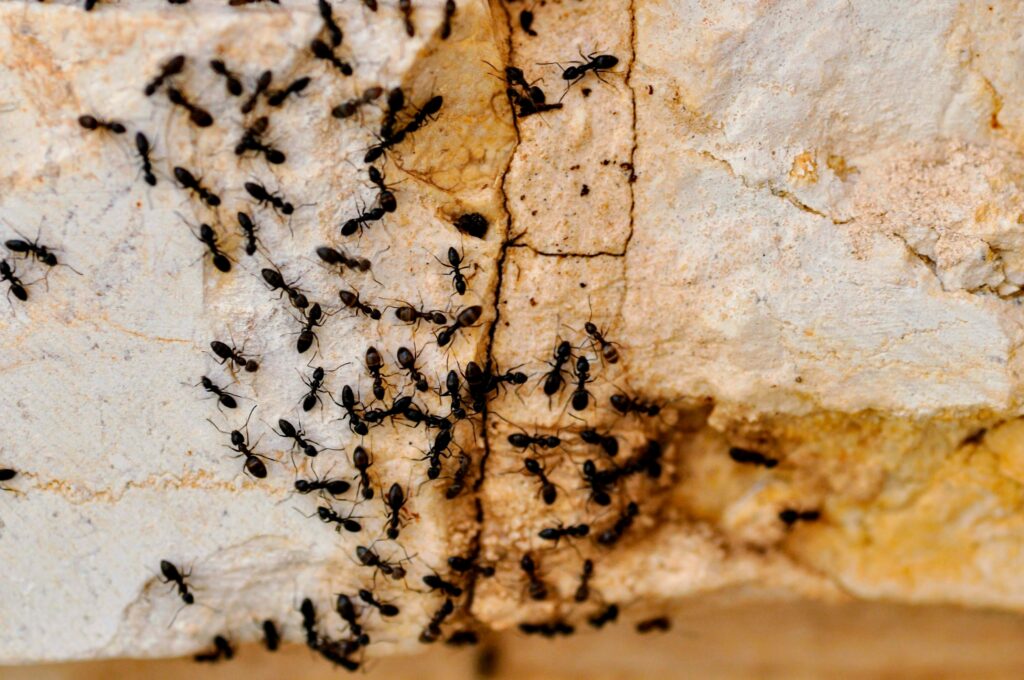
To get rid of ants overnight, start by sealing entry points and keeping living areas clean. Store food in airtight containers, wipe down surfaces, and take out the trash regularly. Natural repellents like peppermint oil or a vinegar solution create barriers ants avoid. Setting up ant baits strategically along baseboards and food areas can manage the infestation effectively. Seal cracks in walls and floors using sealants to prevent entry. Homemade ant killer sprays with ingredients like water, vinegar, and essential oils can disrupt ant trails. Consistent preventive measures like maintaining cleanliness are key.
Genuine Pest Control is your professional provider of exterminating services. Call us today at (402) 300-8168 for reliable and affordable pest management.
Key Takeaways
- Seal entry points with caulk or weatherstripping.
- Use natural repellents like peppermint oil.
- Set up ant baits near baseboards and food sources.
- Clean and declutter to eliminate food sources.
Identify the Ant Entry Points
Identifying the points at which ants are entering your home is the first step in effectively eliminating them overnight. Ant prevention starts with proper home maintenance. Inspect your home thoroughly, paying close attention to cracks in walls, gaps around windows and doors, and openings around pipes. These are common entry points for ants. Seal any openings you find using caulk or weatherstripping to prevent ants from sneaking in. Additionally, keep your living space clean and clutter-free as part of routine home maintenance.
Ants are attracted to food sources, so make sure to store food in airtight containers and clean up any spills or crumbs promptly. Regularly take out the trash, and don't leave dirty dishes in the sink. By maintaining a clean environment, you remove potential food sources that might attract ants. Identifying and sealing entry points combined with good home maintenance practices will go a long way in preventing ants from invading your space.
Clean and Declutter Your Space
To effectively get rid of ants overnight, it is important to clean and declutter your space. By eliminating food sources and sealing entry points, you can greatly reduce the chances of ants invading your home. Maintaining a tidy environment is key to keeping ants at bay and ensuring a pest-free living space.
Eliminate Food Sources
Cleaning and decluttering your living space is essential in eliminating food sources for ants. Proper food storage is key to preventing these pesky pests from invading your home. Make sure all food items are sealed in airtight containers to deny ants easy access. Regularly wipe down countertops, sweep floors, and clean up any spills promptly to remove potential food crumbs that attract ants.
In addition to food storage, implementing good pest control practices can help keep ants at bay. This includes taking out the trash regularly, not leaving dirty dishes in the sink, and storing pet food in sealed containers. By eliminating food sources, you are creating an environment that is less inviting to ants, reducing the likelihood of an infestation. Remember, a clean and clutter-free living space is not only beneficial for preventing ants but also contributes to a healthier and more organized home for you and your family.
Seal Entry Points
Ensuring that all entry points in your living space are properly sealed is essential in preventing ants from infiltrating your home. Pest control experts recommend conducting a thorough inspection of your property to identify any cracks, gaps, or openings that could serve as entry points for ants. Common entry points include gaps around windows and doors, cracks in the foundation, and holes where pipes or wires enter your home.
Sealing these entry points with caulk or weatherstripping can help keep ants out and improve the overall effectiveness of your pest control efforts. Regular home maintenance, such as fixing leaky pipes, repairing damaged screens, and trimming vegetation away from your home, can also help prevent ants from finding their way inside.
Use Natural Repellents
When dealing with an ant infestation, natural repellents can be effective solutions. Essential oil sprays, such as peppermint or tea tree oil, can be mixed with water and sprayed along entry points to deter ants. Alternatively, a vinegar solution can also be used to create a barrier that ants will avoid.
Essential Oil Sprays
Consider incorporating essential oil sprays into your ant control strategy to naturally repel these pests overnight. Essential oils not only offer aromatherapy benefits but also serve as safe alternatives for pest management. Ants are sensitive to strong scents, making essential oils an effective repellent. Peppermint oil is particularly potent in deterring ants due to its strong fragrance that disrupts their ability to communicate and navigate.
To create an essential oil spray, mix 10-15 drops of peppermint oil with water in a spray bottle and shake well before use. Spray this solution along entry points, ant trails, and other areas where ants are present. Repeat this process daily for best results. Other essential oils like tea tree, lavender, or citrus oils can also be effective in repelling ants.
Using essential oil sprays not only helps in keeping ants at bay but also adds a pleasant aroma to your home. Embrace the power of natural repellents for ant control and enjoy a pest-free environment.
Vinegar Solution
Let's now explore using a vinegar solution as a natural repellent for ants in your home. Vinegar offers numerous benefits as a homemade repellent due to its strong scent that disrupts ants' ability to communicate and navigate. When used correctly, vinegar can effectively deter ants from entering your living spaces. To create a vinegar solution, simply mix equal parts of water and vinegar in a spray bottle and apply it along common ant entry points like windowsills, doorways, and baseboards. The acidic nature of vinegar is unpleasant for ants, driving them away quickly. This method is not only natural but also budget-friendly and safe for households with pets and children.
To highlight the benefits of using a vinegar solution as an ant repellent, take a look at the table below:
| Vinegar Benefits | Homemade Repellents |
|---|---|
| Natural and safe | Easy to make |
| Affordable | Environmentally friendly |
| Effective repellent | Versatile application |
Set Up Ant Baits
One effective method for dealing with ants is to strategically place ant baits around your home. Ants are social insects that live in colonies and forage for food to bring back to their nests. By setting up ant baits, you can take advantage of their behavior by attracting them to the bait, which they will then carry back to the colony, effectively managing the pest population.
Ant baits come in different forms such as gels, granules, or stations. It's important to place these baits in areas where ants are commonly seen trailing, such as along baseboards, near entry points, and around food sources. Make sure to keep the baits out of reach of children and pets, as they contain insecticides that are harmful if ingested.
Regularly check and replace the ant baits as needed to maintain continued effectiveness. Remember, patience is key when using ant baits for pest control. Over time, you will notice a reduction in the ant population as the bait works its way through the colony, ultimately helping you eliminate ants overnight.
Seal Cracks and Gaps
To prevent ants from entering your home, it is essential to seal cracks and gaps in your walls, floors, and foundation. Ants can easily find their way indoors through even the tiniest openings, so taking the time to repair these entry points can make a significant difference in keeping them out.
Start by inspecting the exterior of your home for any cracks in the foundation. Seal these with appropriate materials to prevent ants from using them as entry points. Additionally, check your windows for gaps and apply caulk to seal them off effectively. This simple step can go a long way in preventing ants from finding their way inside.
Remember to also inspect areas where utility pipes and cables enter your home. These are common entry points for ants and other pests. Use sealants or expanding foam to close off any openings around these entry points.
Try DIY Ant Killer Sprays
Consider trying homemade ant killer sprays as a natural and cost-effective solution to eliminate ants in your home. Understanding ant behavior is essential when dealing with these pests. Ants leave behind pheromone trails, which guide other ants to food sources. By disrupting these trails with DIY ant killer sprays, you can effectively deter ants from returning to the same areas.
When it comes to pest control, homemade ant killer sprays can be a powerful tool. A common recipe involves mixing equal parts water and white vinegar, then adding a few drops of essential oil like peppermint or tea tree oil. This solution not only kills ants on contact but also disrupts their scent trails, preventing more ants from following.
Another effective DIY ant killer spray involves combining water with dish soap. This mixture coats the ants' bodies, suffocating them and disrupting their ability to communicate with other ants. By targeting ant behavior in this way, you can control their populations and keep your home ant-free.
Implement Preventive Measures
To prevent ants from entering your home, maintaining cleanliness and sealing entry points are key preventive measures. Ant control starts with eliminating food sources that attract them. Clean up spills promptly, store food in airtight containers, and take out the trash regularly. Wipe down surfaces to remove crumbs and sticky residues that ants feed on. Additionally, seal any cracks or gaps in walls, windows, and doors to block their entry points. Regularly inspect your home for potential entryways and address them promptly to prevent ants from infiltrating your living spaces.
Pest management also involves keeping outdoor areas tidy. Trim vegetation away from the house, as branches touching the structure can provide a bridge for ants to enter. Remove debris and keep outdoor trash cans tightly sealed. By practicing good hygiene inside and outside your home, you can notably reduce the likelihood of ant infestations. These preventive measures form the foundation of effective ant control and pest management.
Frequently Asked Questions
Can Ants Cause Damage to My Property?
Ant prevention is vital in safeguarding your property as ants can cause damage by nesting in walls, chewing through wires, and compromising structural integrity. Protect your property with proactive measures to deter ants.
Will Ants Be Attracted to Pet Food?
Ants are naturally drawn to food sources, including pet food. It's important to store pet food properly in kitchens to prevent attracting ants. Likewise, when having picnics, seal food containers tightly to deter ant infestations.
How Quickly Do Ant Baits Work?
Ant baits vary in effectiveness, typically taking a few days to start showing results. For quick ant removal, look for fast-acting baits or combine multiple methods for a more immediate solution. Regular monitoring is essential for successful eradication.
Are There Any Plants That Repel Ants?
Natural solutions to repel ants can be found in certain indoor plants. Plants like mint, lavender, and rosemary are known for their ability to deter ants due to their strong scents. Consider incorporating these plants into your home.
Can Ants Infest Electronic Devices?
Ants can infest electronic devices, seeking warmth and food sources. They may infiltrate appliances, such as microwaves or computers, and even electrical outlets, causing damage and potential safety hazards. Prompt professional intervention is essential.


