
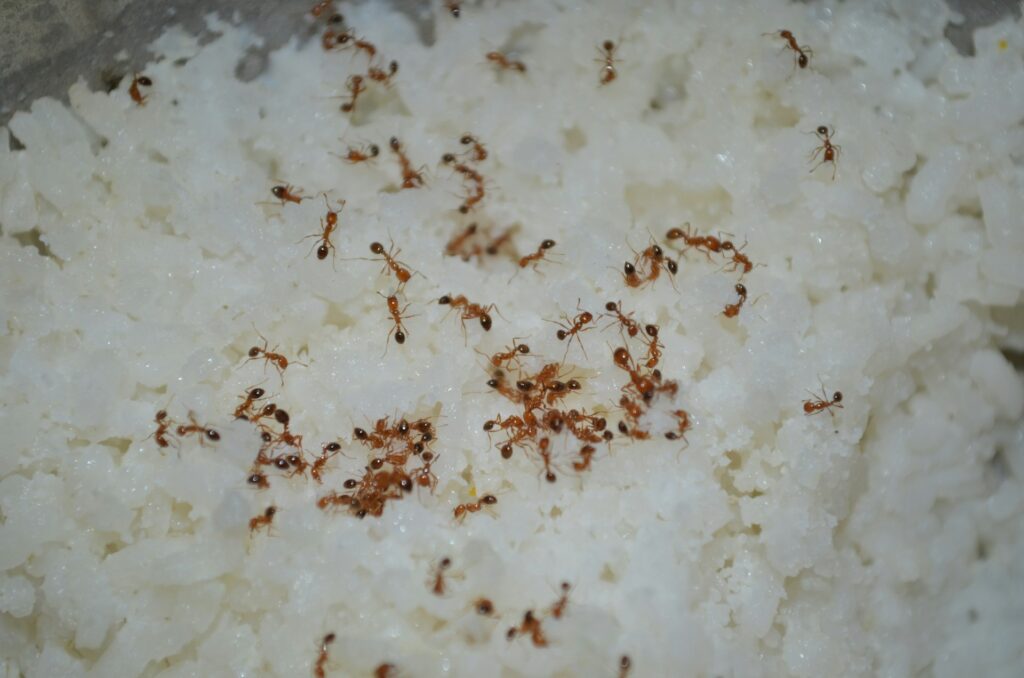
Ant infestations happen when ants find accessible entry points, are attracted to food sources like sugars and proteins, nest in soil or inside structures, and are influenced by weather conditions such as temperature changes. To prevent infestations, focus on sealing entry points, storing food properly, maintaining cleanliness, and using ant baits. Understanding these factors is key to effectively managing and avoiding ant infestations.
Genuine Pest Control is your professional provider of exterminating services. Call us today at (402) 300-8168 for reliable and affordable pest management.
Key Takeaways
- Entry points like cracks and gaps allow ants indoors.
- Food sources attract ants with sugars, proteins, and fats.
- Ants establish nests in soil, wood, or structures.
- Weather changes influence ant behavior and movements.
Entry Points for Ants
Ants typically find their way into homes through tiny cracks and openings in walls, windows, and doors. Structural weaknesses in the building's foundation or gaps in window screens provide easy access for these tiny pests. Additionally, landscaping features like overhanging branches or bushes touching the house can create bridges for ants to march inside.
Pet food left out in bowls or crumbs around the feeding area can attract ants indoors. It is essential to keep pet food dishes clean and the surrounding area free of spills to deter ants from invading. Similarly, improper garbage disposal or overflowing trash cans can lure ants inside in search of food sources.
To prevent ant infestations, homeowners should regularly inspect their property for any structural weaknesses that could serve as entry points for ants. Keeping pet food areas clean and ensuring proper garbage disposal can also help in deterring these unwanted intruders from making their way into homes.
Attraction to Food Sources
The presence of accessible food sources in or around a property is a significant factor that can attract ants indoors. Ants have specific food preferences that drive their foraging behavior, making certain areas more prone to infestations. Understanding what attracts ants to food sources can help in preventing infestations effectively. Here are some key points to take into account:
- Food Preferences: Ants are drawn to a variety of foods, including sugars, proteins, and fats. Understanding their preferences can help in identifying potential attractants in your home.
- Foraging Behavior: Ants communicate through pheromones, leaving trails for other ants to follow to food sources. Once they find a food source, they will continue to return to it, leading to a persistent ant presence.
Nesting Habits of Ants
Understanding the nesting habits of these insects provides valuable insight into their behavior patterns and can aid in effectively managing ant infestations in residential spaces. Ants are social insects that live in colonies, each with specific roles and tasks. Ant communication plays an essential role in coordinating activities within the colony, such as foraging for food and defending the nest. The colony structure is organized hierarchically, with a queen responsible for reproduction, workers handling tasks like gathering food and caring for larvae, and soldiers defending the nest.
| Nesting Habit Aspect | Description | Importance |
|---|---|---|
| Location | Ants nest in soil, wood, or inside structures. | Knowing nest locations aids in targeted control. |
| Size | Colonies can range from a few hundred to millions of ants. | Understanding colony size helps estimate infestation scale. |
| Complexity | Nests can be simple tunnels or elaborate structures with chambers. | Recognizing nest complexity guides effective elimination strategies. |
Weather Conditions and Ant Behavior
Meteorological factors greatly influence the foraging and nesting behaviors of ants. Weather conditions play a pivotal role in determining how ants behave and interact within their colonies. Here are some key points to keep in mind:
- Ant Foraging: Ants are highly sensitive to changes in weather conditions such as temperature, humidity, and precipitation. These factors can impact their foraging patterns, with ants becoming more active during warm, dry weather and less active during cold, wet conditions. Understanding these patterns can help predict when ant infestations may occur.
How to Prevent Ant Infestations
Ant infestations can be effectively prevented through simple yet strategic measures that target the key factors attracting ants to your living spaces. One of the most natural deterrents to keep ants at bay is to maintain cleanliness. Regularly clean your kitchen, dining area, and any spaces where food is consumed. Wipe down surfaces, sweep floors, and promptly clean up any spills to eliminate potential food sources that attract ants. Additionally, store food in airtight containers and promptly dispose of garbage in sealed bins to remove enticing odors.
Furthermore, sealing off entry points such as cracks in walls, windows, and doors can help prevent ants from infiltrating your home. Consider using effective treatments like ant baits or sprays in areas where ants are commonly seen. These treatments can help eradicate existing ant colonies and deter new ones from forming. By combining natural deterrents with effective treatments, you can considerably reduce the likelihood of ant infestations in your living spaces.
Frequently Asked Questions
Can Ants Cause Structural Damage to a House?
Ants, though small, can cause significant structural damage to a house over time. Prevention methods include sealing entry points and keeping surfaces clean. Signs of damage include weakened wood. Repair costs can vary, and insurance coverage may depend on the policy.
Do Certain Ant Species Prefer Specific Climates?
Ant behavior and adaptation are influenced by climate, with certain ant species showing preferences for specific conditions. Understanding these relationships can help anticipate ant infestations and tailor prevention strategies to the local climate and ecosystem.
How Quickly Do Ant Populations Grow?
Ant population growth can be rapid, with some colonies reaching thousands within weeks. Factors like food availability, temperature, and nest location influence growth. Understanding these environmental elements is essential for effective ant control strategies.
Are There Natural Ways to Repel Ants?
To naturally repel ants, consider using essential oils like peppermint or tea tree oil, vinegar, coffee grounds, or chalk. These substances can deter ants due to their strong scents or abrasive textures, helping to keep them at bay.
Can Ants Carry Diseases Harmful to Humans?
Ants can carry diseases harmful to humans due to their behavior of foraging in unsanitary places. Disease transmission can occur through contact with contaminated surfaces. Health risks include food poisoning and skin infections. Prevention measures include maintaining cleanliness and sealing entry points.


