
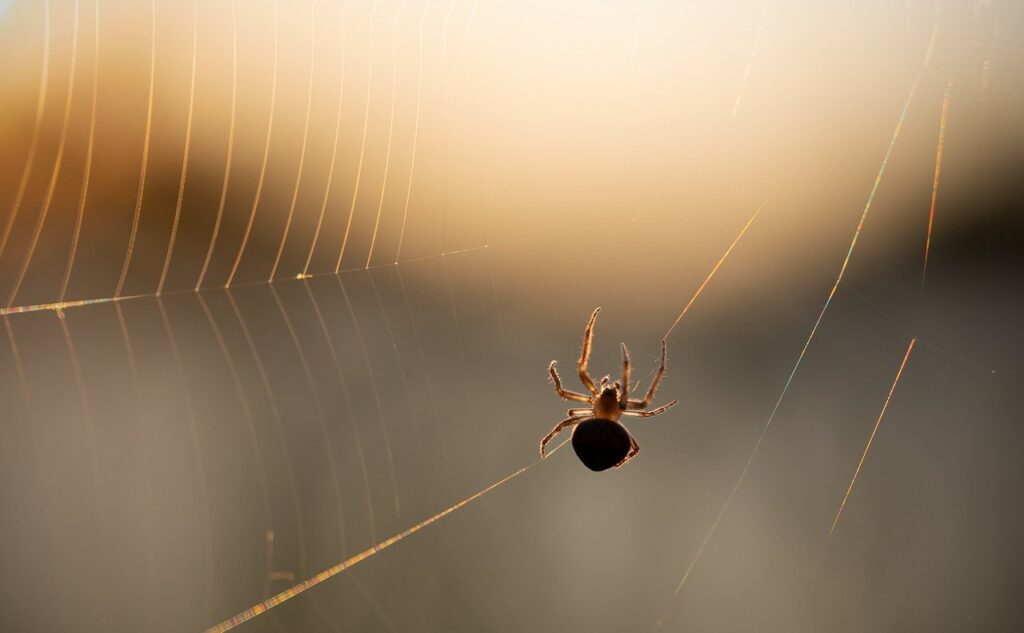
Spiders come out due to various attractions such as temperature, humidity, prey availability, shelter options, outdoor lighting, scents, seasonal changes, human activity, vegetation, and water sources. They are drawn to moderate temperatures and ideal humidity levels that create a comfortable habitat. Spiders are also influenced by the abundance of prey, seeking areas with ample food sources. Additionally, shelter in dark, secluded spots and the presence of scents like pheromones play a role in their emergence. These factors combine to determine when and where spiders appear.
Genuine Pest Control is your professional provider of exterminating services. Call us today at (402) 300-8168 for reliable and affordable pest management.
Key Takeaways
- Ideal habitat conditions like moderate temperatures and humidity attract spiders.
- Abundance of prey influences spider presence and activity.
- Dark, secluded spaces provide shelter and stability for spiders.
- Spiders are attracted to light sources, but excessive light can disrupt their behavior.
- Pheromones, scents, and food odors play a significant role in attracting spiders.
Temperature and Humidity
When it comes to attracting spiders, one key aspect to take into account is the temperature and humidity of their environment. Spiders are highly sensitive to environmental factors, and these play a pivotal role in their presence. The microclimate effects, influenced by weather patterns and moisture levels, greatly impact the behavior and activity of spiders.
Spiders tend to thrive in environments with moderate temperatures and humidity levels. Extreme temperatures can deter spiders from coming out, while high humidity can attract them, especially in search of prey. The balance of these factors creates an ideal habitat for spiders to inhabit and build their webs.
Understanding the microclimate effects on spider behavior is essential when trying to attract them to a certain area. By creating an environment with suitable temperature and humidity levels, you can increase the likelihood of spiders being present. Monitoring weather patterns and adjusting moisture levels accordingly can help in attracting spiders to your desired location.
Prey Availability
When considering how to attract spiders, understanding prey availability is essential. The abundance of prey in a specific area directly impacts the spider population and their hunting success. Different spiders employ a variety of hunting strategies to catch their prey efficiently.
Prey Abundance Impact
How does the abundance of prey in an environment impact the presence and behavior of spiders within that ecosystem? The abundance of prey plays an essential role in attracting spiders to come out and thrive in a specific area. When there is an increase in prey availability, spiders are more likely to be present as they can easily find food sources to sustain themselves. This abundance of prey can lead to a higher predator presence, as spiders are drawn to areas where there is a sufficient food supply to support their population.
Furthermore, environmental changes can also influence the prey abundance impact on spiders. Factors such as temperature, humidity levels, and vegetation cover can affect the availability of prey in an ecosystem, consequently influencing the presence and behavior of spiders. For instance, a rise in temperature may lead to an increase in insect activity, providing spiders with more potential prey to feed on.
Hunting Strategies Employed
Spiders utilize a variety of hunting strategies based on the availability of prey in their environment. One common strategy is web construction. Spiders that construct webs wait patiently for prey to become ensnared in their intricate traps. This method is efficient for spiders in areas with a steady supply of flying insects. On the other hand, some spiders prefer ambush hunting. These spiders do not rely on webs but instead hide and wait for unsuspecting prey to come close before pouncing on them. This strategy is beneficial for spiders in environments where prey is scarce or unpredictable.
Understanding a spider's hunting strategy can provide insight into the ecosystem they inhabit. By observing the type of hunting strategy a spider employs, one can infer the availability of prey in that particular environment. Whether through web construction or ambush hunting, spiders adapt their hunting techniques to best suit the conditions of their surroundings, ensuring their survival in a world where prey availability fluctuates.
Shelter and Hiding Spots
When attracting spiders to your garden, providing shelter and hiding spots is essential. Spiders are drawn to dark, secluded areas where they can hide and wait for prey. Their natural camouflage abilities allow them to blend into their surroundings, making them more successful hunters.
Preferred Dark Spaces
Seeking refuge from the harsh elements and potential predators, spiders often gravitate towards preferred dark spaces for shelter and hiding. These dark spaces provide them with protection from excessive light exposure, which can be harmful to their sensitive bodies. Spiders are known to be sensitive to light, and too much exposure can lead to dehydration and even death. Additionally, dark spaces offer a stable environment with fewer temperature fluctuations compared to open areas. This helps spiders regulate their body temperature more effectively, ensuring their survival.
When searching for shelter and hiding spots, spiders look for areas that are dark and secluded, such as cracks in walls, under furniture, or in basements. These spaces provide them with a sense of security, allowing them to rest undisturbed and unseen by potential threats. By understanding spiders' preference for dark spaces, we can create a more hospitable environment for them while also keeping them away from areas where they may cause inconvenience or discomfort to humans.
Natural Camouflage Abilities
In their quest for shelter and hiding spots, spiders exhibit remarkable natural camouflage abilities that enable them to blend seamlessly into their surroundings. This natural adaptation serves multiple purposes, with predator avoidance being a key benefit. By mimicking the colors and textures of their environment, spiders can avoid detection by potential threats, increasing their chances of survival. Additionally, this camouflage aids in successful mating rituals, as male spiders can approach females without alarming them, thereby increasing their chances of reproductive success.
Spiders have evolved diverse camouflage techniques, such as resembling the bark of trees, blending into flowers, or even mimicking bird droppings to avoid detection. These strategies not only help spiders find shelter and hiding spots but also play an essential role in their survival. By leveraging their natural camouflage abilities, spiders can navigate their habitats effectively, evade predators, and engage in successful mating rituals, ensuring their continued presence in ecosystems worldwide.
Outdoor Lighting
Outdoor lighting plays an important role in attracting spiders to your garden or outdoor space. Artificial illumination can disrupt the natural environment, affecting the behaviors of various creatures, including spiders. Here's how outdoor lighting can impact spider activity:
- Attraction: Spiders are drawn to light sources, mistaking them for opportunities to find prey. This attraction can lead spiders to congregate around outdoor lights, increasing the likelihood of encounters with humans.
- Disruption of Ecosystem: Light pollution from outdoor lighting can interfere with the natural rhythms of spiders. Excessive light at night can confuse spiders that use darkness to determine when to hunt or build webs, affecting their feeding patterns and reproduction cycles.
- Increased Visibility: Outdoor lighting can make spiders more visible to predators, disrupting the delicate balance of the ecosystem. Predators that rely on darkness for hunting may capitalize on the increased visibility provided by artificial illumination, posing a threat to the spider population.
Scents and Odors
When it comes to attracting spiders, scents and odors play an essential role. Pheromones released by spiders can attract mates and signal territories. Additionally, food odors can draw spiders in search of prey, making scents an important factor in spider attraction.
Pheromones and Scents
Spiders are attracted to specific pheromones and scents in their environment. Chemical communication plays a pivotal role in how spiders interact with their surroundings. Through scent detection, spiders can locate potential mates, find prey, or identify safe shelter. Here are three ways in which pheromones and scents influence spider behavior:
- Mating Signals: Female spiders release pheromones that attract males during mating season. These chemical signals help in finding suitable partners for reproduction.
- Prey Attraction: Some spiders emit scents that lure prey into their webs. These pheromones can mimic the smell of food, enticing insects to come closer and become trapped for the spider's next meal.
- Territorial Marking: Spiders use pheromones to mark their territory and communicate with other spiders. By leaving scent trails, spiders can establish boundaries and warn off potential competitors.
Food Odors Attract
How do food odors attract spiders? Spiders have a want sense of smell, allowing them to detect food sources through scent trails. When there are food odors present, such as those from insects or other prey, spiders are drawn to these scents and follow them to locate their next meal.
To better understand how food odors attract spiders, let's take a look at the following table:
| Food Odor Source | How Spiders Detect | Result |
|---|---|---|
| Insects | Scent trails | Attraction to prey |
| Food waste | Odor molecules | Increased foraging behavior |
| Prey carcasses | Chemical cues | Enhanced hunting instincts |
Web Building Opportunities
Seeking ideal locations for web construction is an essential aspect of a spider's daily routine. Spiders are drawn to places where they can easily produce silk and maintain their webs efficiently.
Key Points:
- Silk Production: Spiders are attracted to areas with ample resources for silk production. They seek locations where they can spin their silk easily to create sturdy webs for hunting and shelter.
- Web Maintenance: Spiders look for spots that allow for easy web maintenance. They prefer areas where their webs are less likely to be disturbed by external factors, enabling them to focus on catching prey and staying safe.
- Structural Support: Spiders are inclined to build webs in locations with sufficient structural support. They choose spots where their webs can be securely anchored, ensuring stability for effective trapping of insects.
Seasonal Changes
In response to changing environmental conditions and varying weather patterns, spiders adapt their web-building behaviors to accommodate seasonal shifts. Weather patterns play a significant role in influencing spider activity. Spiders tend to be more active during warm weather, as it provides them with ideal conditions for hunting and mating. In contrast, during colder seasons, spiders may reduce their activity and seek shelter in protected areas to survive harsh climate shifts.
Climate shifts also impact spiders' behavior and web-building habits. As the climate changes over time, spiders may adjust the location and structure of their webs to adapt to new environmental conditions. For example, increased rainfall might lead spiders to build their webs higher off the ground to avoid flooding, while periods of drought could prompt them to construct webs in more shaded areas to retain moisture.
Human Activity
Due to urbanization and human encroachment into natural habitats, spiders are increasingly encountering human activity that can impact their web-building behaviors. This interference can alter the spiders' natural patterns and behaviors in several ways:
- Noise Pollution: Loud noises from urban areas can disrupt spiders' ability to detect prey caught in their webs. Constant noise may also affect their ability to communicate through vibrations on the web.
- Urban Development: The expansion of cities can lead to the destruction of natural habitats where spiders thrive. This forces spiders to adapt to new environments, sometimes leading them to build webs in less suitable locations.
- Light Pollution: Urban areas tend to have excessive artificial lighting at night. This can attract insects away from spider webs, as they are drawn to the light sources. Consequently, spiders may struggle to catch prey due to this light interference.
These factors showcase how human activity can influence spiders and their web-building behavior in urban environments.
Vegetation and Landscaping
Amidst the urban landscape, the presence of vegetation and landscaping plays a pivotal role in shaping the habitat for spiders. The variety of plants and the design of landscaping directly influence the abundance and diversity of spiders in an area.
Different plant species attract various insects, which in turn serve as prey for spiders. Plants like shrubs, bushes, and flowers provide hiding spots and create a suitable environment for spiders to thrive. Additionally, landscaping design features such as mulch, rocks, and logs offer ideal shelters and breeding grounds for these arachnids.
Moreover, the presence of vegetation enhances the overall biodiversity of an area, attracting a range of insects that spiders feed on. This interconnected ecosystem created by plant variety and landscaping design supports the survival and reproduction of spiders.
Water Sources
The availability of water sources is a fundamental aspect that influences the presence and activity of spiders in an environment. Spiders are attracted to wet environments due to the necessity of water for their survival. Here are three key points to understand how water sources can attract spiders:
- Nesting Opportunities: Spiders require water not only for hydration but also for creating suitable nesting sites. Wet environments provide the necessary moisture for spiders to build their webs and burrows, supporting their reproductive activities.
- Prey Attraction: Water sources in a habitat attract other insects and small creatures, which are the primary food source for spiders. Spiders will frequent areas with water availability to increase their chances of catching prey, sustaining their energy needs.
- Migration and Movement: Spiders may follow water sources for migration or movement purposes. Flowing water or damp areas can act as guiding landmarks for spiders moving through an environment, leading them to specific locations.
Frequently Asked Questions
Do Spiders Prefer Certain Colors or Patterns in Their Environment?
In understanding spider behavior, it is essential to explore spider color preferences and the impact of patterns on their environment. Research suggests that spiders may be attracted to certain colors or patterns, but further studies are needed to confirm these findings.
Can Vibrations From Music or Noise Attract Spiders?
Sound vibrations, including music or noise, can influence spider behavior. Certain frequencies may attract spiders, affecting their activity. Understanding how vibrations impact spiders can help manage their presence, especially in areas where noise levels fluctuate.
Do Spiders Avoid Certain Types of Surfaces or Textures?
Exploring spider behavior reveals their aversion to rough wall textures and preference for silk linings. Light colors and intricate designs attract spiders, influencing their habitat choices. Understanding these nuances aids in creating spider-friendly environments.
Are There Specific Times of Day When Spiders Are More Active?
When exploring spider behavior, it's essential to take into account environmental factors influencing their activity. Time of day plays a significant role in spider activity levels. To observe spiders at their peak activity, monitoring their behavior during dusk and dawn is recommended.
Can the Presence of Other Insects Deter Spiders From an Area?
Insect competition influences spider behavior. Territorial disputes may occur due to insect population dynamics. Spiders may avoid areas with high insect activity to reduce competition, impacting their foraging behavior and distribution patterns.


