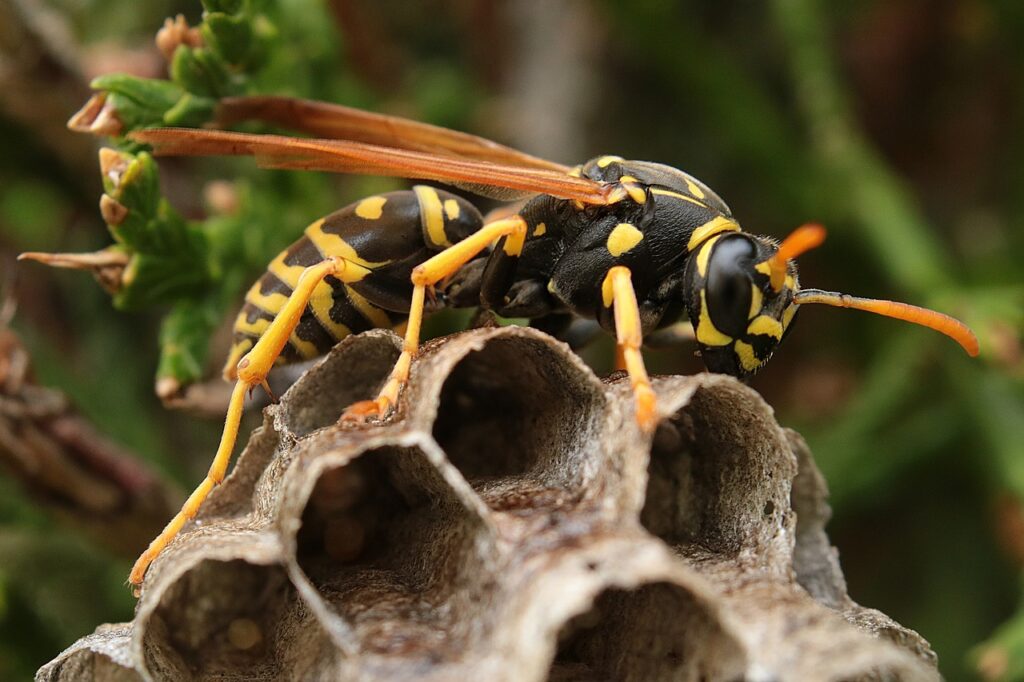
Yellow jackets have natural enemies that help keep their populations in check. These enemies include ants like Argentine ants and black carpenter ants, insects such as dragonflies and praying mantises, birds like swallows and flycatchers, as well as mammals like bears and raccoons. Even some reptiles consume yellow jackets. These predators play an essential role in maintaining ecological balance by controlling yellow jacket populations. Understanding the relationship between yellow jackets and their enemies can shed light on important aspects of ecosystem dynamics and conservation efforts.
Genuine Pest Control is your professional provider of exterminating services. Call us today at (402) 300-8168 for reliable and affordable pest management.
Key Takeaways
- Ant species like Argentine ants and black carpenter ants prey on yellow jacket larvae and adults.
- Birds like swallows, flycatchers, and warblers are natural enemies of yellow jackets.
- Mammals like bears, skunks, and raccoons raid yellow jacket nests for larvae and pupae.
- Insects like dragonflies and praying mantises are effective predators of yellow jackets.
- Some reptiles consume yellow jackets as a food source, influencing their populations in ecosystems.
Natural Predators
Yellow jackets, known for their aggressive nature and painful stings, have a range of natural predators that help control their population in various ecosystems. These natural predators play a pivotal role in maintaining ecological balance by keeping yellow jacket populations in check through biological control methods. For instance, certain species of ants, such as the Argentine ant and the black carpenter ant, are known to prey on yellow jacket larvae and adults, helping to limit their numbers naturally.
Additionally, some insect species like dragonflies and praying mantises are also effective predators of yellow jackets. These predators contribute to the overall health of ecosystems by preventing yellow jackets from becoming overly dominant and disrupting the natural balance of other species in the food chain.
Birds
Have you ever observed birds swooping down with precision to catch their prey in mid-flight? Bird behavior is fascinating to observe, especially when it comes to their role as predators in the ecosystem. Birds play an important part in maintaining the balance of nature through predator-prey dynamics.
Many bird species are adept hunters, utilizing their want eyesight and agility to capture insects, including yellow jackets, on the wing. Their ability to swoop down and snatch prey mid-flight showcases their remarkable hunting skills. Birds like swallows, flycatchers, and warblers are known for their insect-hunting prowess, making them natural enemies of yellow jackets.
Predator-prey dynamics in bird behavior are vital for controlling insect populations, including that of yellow jackets. By preying on these insects, birds help keep their numbers in check, preventing overpopulation that could disrupt the ecosystem. So, the next time you see a bird darting through the air, remember that it may be on a mission to keep the yellow jacket population under control.
Insects
In the intricate web of ecosystems, insects play an important role in various ecological processes. Within this intricate balance, insects also have their own set of invertebrate enemies, contributing to the ecosystem's equilibrium. Insect prey is essential for maintaining this balance, as it helps control insect populations that could otherwise disrupt the ecosystem.
Insects have developed various survival strategies to escape their invertebrate enemies. Some camouflage themselves to blend into their surroundings, while others have evolved warning colors to deter predators. Insects also use chemical defenses, such as emitting foul odors or toxins, to fend off potential threats.
The interplay between insects and their invertebrate enemies is a fascinating aspect of ecosystem dynamics. By keeping insect populations in check, these enemies help prevent outbreaks that could have cascading effects on the ecosystem. Understanding the interactions between insects and their invertebrate enemies is crucial for maintaining the delicate balance of our natural world.
Mammals
Mammals, as a diverse group of vertebrates, play essential roles in ecosystems worldwide. They interact with various species, including yellow jackets, impacting their populations through predation and other behaviors. When it comes to yellow jackets, mammals can be both foes and allies in different scenarios. Here are some ways mammals can influence yellow jacket populations:
- Foraging Behavior: Mammals like bears, skunks, and raccoons are known to raid yellow jacket nests in search of larvae and pupae, reducing their numbers significantly.
- Predation: Some mammals, such as shrews and bats, actively hunt adult yellow jackets, keeping their populations in check.
- Defensive Strategies: Yellow jackets have evolved defenses against mammalian predators, including stingers that can deliver painful venomous stings. However, some mammals have developed strategies to avoid or mitigate these defenses, such as thick fur or specialized hunting techniques.
Understanding mammal behavior and yellow jacket defenses is vital in managing their interactions and maintaining ecological balance.
Reptiles
Reptiles play a pivotal role in the ecosystem as natural predators of Yellow Jackets. This relationship between reptiles and Yellow Jackets sheds light on the behavioral interactions that occur in nature. Understanding how reptiles interact with Yellow Jackets can provide valuable insights into pest control strategies and ecological balance.
Reptiles and Yellow Jackets
Reptiles, in their interactions with Yellow Jackets, play a significant role in the ecosystem dynamics. They contribute to maintaining the balance by influencing the population of Yellow Jackets through various means.
- Reproductive Strategies: Some reptiles, like certain snake species, prey on Yellow Jackets as a food source. By consuming Yellow Jackets, these reptiles help control their populations, which can prevent overpopulation and its negative effects on the ecosystem.
- Defensive Mechanisms: Reptiles have developed defensive mechanisms that allow them to protect themselves from Yellow Jackets. For instance, turtles have hard shells that shield them from Yellow Jacket stings, while lizards are often agile enough to avoid getting stung. These adaptations enable reptiles to coexist with Yellow Jackets while minimizing harm to themselves.
- Biodiversity: The presence of reptiles in an ecosystem adds to its biodiversity. By interacting with Yellow Jackets, reptiles contribute to the intricate web of relationships that exist within ecosystems, promoting overall stability and health.
Natural Predators Relationship
The relationship between natural predators and Yellow Jackets, particularly in the context of reptiles, underscores the intricate balance within ecosystems. Predator-prey dynamics play a pivotal role in regulating Yellow Jacket populations, preventing them from becoming overly abundant and disrupting the ecosystem balance.
| Reptile Species | Role in Controlling Yellow Jackets |
|---|---|
| Snakes | Feed on Yellow Jackets and their larvae, helping to reduce their numbers. |
| Lizards | Consume Yellow Jackets and help keep their populations in check. |
| Turtles | Opportunistically feed on Yellow Jackets, contributing to population control. |
| Alligators | Act as top predators, regulating various species including Yellow Jackets. |
These reptiles contribute to maintaining the delicate balance within ecosystems by controlling Yellow Jacket populations. Their interactions with Yellow Jackets showcase the interconnectedness of species and the importance of predator-prey relationships in preserving the overall health of the environment.
Behavioral Interactions Explained
In the intricate web of ecosystem dynamics, the behavioral interactions of certain reptiles with Yellow Jackets offer a fascinating insight into the delicate balance of nature. When it comes to reptiles interacting with Yellow Jackets, two key aspects come into play: social hierarchy and aggressive defense.
- Social Hierarchy: Some reptiles, such as certain species of snakes, have a well-defined social hierarchy within their groups. This hierarchy can influence their interactions with Yellow Jackets, affecting whether they see them as prey or a threat.
- Aggressive Defense: Reptiles, like certain lizards, may exhibit aggressive defense mechanisms when faced with Yellow Jackets. This can involve rapid movements, vocalizations, or even physical attacks to ward off the perceived threat.
- Adaptation Strategies: Some reptiles have developed specific strategies to deal with Yellow Jackets, such as camouflaging to avoid detection or using their agility to escape potential attacks.
Understanding these behavioral interactions is essential in appreciating the complex relationships that exist within ecosystems and how different species coexist and adapt to each other's presence.
Environmental Factors
Amidst the diverse array of environmental factors that impact the presence and behavior of yellow jackets, one significant element stands out: climate. Habitat loss due to human activities such as deforestation and urbanization has a direct impact on the availability of suitable nesting sites for yellow jackets. Additionally, pollution effects from pesticides and other chemicals can disrupt their foraging patterns and lead to population declines.
Yellow jackets are highly sensitive to changes in their environment, particularly when it comes to climate variations. Extreme temperatures and fluctuations in weather patterns can impact their ability to forage for food and build nests, ultimately affecting their survival. Hence, conservation efforts to protect natural habitats and reduce pollution levels are vital in maintaining healthy yellow jacket populations.
Understanding the environmental factors that influence yellow jackets is essential for promoting coexistence and finding effective ways to manage their populations without causing harm. By addressing issues such as habitat loss and pollution effects, we can help mitigate the challenges these insects face and secure a balanced ecosystem for all species.
Weather
When considering the environmental factors that affect yellow jackets, it is important to acknowledge the significant impact of climate and weather patterns. The fluctuation in temperature, precipitation levels, and overall environmental conditions can all influence the behavior and populations of these insects. Understanding how weather plays a role in the dynamics of yellow jacket colonies is vital in implementing effective management strategies.
Impact of Climate
Weather conditions play a significant role in influencing the behavior and population dynamics of yellow jackets, the notorious enemy of picnics and outdoor gatherings. Climate change, in particular, has been altering the habitats and availability of resources for these stinging insects. The impact of climate on yellow jackets is pivotal and can be summarized as follows:
- Temperature Shifts: Changes in temperature patterns affect the lifecycle of yellow jackets, influencing their breeding and foraging behaviors.
- Precipitation Levels: Variations in rainfall amounts impact the availability of food sources for yellow jackets, such as nectar and other insects.
- Seasonal Changes: Alterations in the duration and intensity of seasons can disrupt the natural cycles of yellow jackets, affecting their population growth and distribution.
Understanding the relationship between climate and yellow jackets is crucial for effective pest management strategies and ensuring the safety of outdoor activities. By recognizing these influences, individuals can better prepare and protect themselves from these unwelcome visitors.
Weather's Influence
Under the influence of various weather patterns, yellow jackets exhibit distinct behavioral responses that can impact their interactions with humans and the environment. Seasonal patterns play a significant role in the behavior of yellow jackets. During the spring and summer months, when temperatures rise, these insects become more active in searching for food and building their nests. However, as the weather cools down in the fall, yellow jackets become more aggressive as they scavenge for food to sustain their colonies before winter sets in.
Temperature changes also affect the behavior of yellow jackets. Warmer temperatures tend to make yellow jackets more active and aggressive, while cooler temperatures can cause them to become more sluggish. Additionally, extreme weather events such as storms or heavy rainfall can disrupt yellow jacket colonies, leading to changes in their foraging behavior and potentially increasing their interactions with humans.
Understanding how weather influences yellow jacket behavior is essential for effectively managing and mitigating interactions with these insects, especially during times of seasonal shifts and temperature variations.
Habitat Destruction
Habitat destruction poses a significant threat to the population of Yellow Jackets. This destruction often occurs due to urban development encroaching on natural habitats, leading to a decline in Yellow Jacket populations. The consequences of habitat destruction are far-reaching and can disrupt the delicate ecosystem balance that these insects are a part of. Some key points to bear in mind include:
- Loss of nesting sites: Urban development can result in the destruction of trees, shrubs, and other natural features that Yellow Jackets use for nesting. This loss of habitat can lead to a decrease in their population.
- Reduced food sources: Habitat destruction can also eliminate the flowers, plants, and insects that Yellow Jackets rely on for food. This scarcity can impact their ability to thrive and reproduce.
- Disruption of natural cycles: By altering the landscape through urban development, we interfere with the natural cycles and interactions that Yellow Jackets depend on for survival, further threatening their population.
Human Intervention
Human intervention plays a significant role in shaping the interactions between Yellow Jackets and their environment. When it comes to pest control, humans often resort to using various methods to manage Yellow Jacket populations, especially when they become a nuisance or pose a threat. Pest control strategies such as using traps and insecticides are commonly employed to mitigate the impact of Yellow Jackets on humans and their surroundings.
Furthermore, hive removal is another aspect of human intervention in dealing with Yellow Jackets. Removing Yellow Jacket nests near human-inhabited areas helps prevent potential stings and disturbances. Professional pest control services often specialize in safely and effectively removing Yellow Jacket hives to secure the safety of both humans and the insects.
Frequently Asked Questions
Do Yellow Jackets Hibernate During the Winter?
During winter, yellow jackets do not hibernate. Instead, they survive by finding shelter in protected locations like underground burrows or in walls of buildings. These survival strategies help them endure the cold months until spring arrives.
How Do Yellow Jackets Communicate With Each Other?
Yellow jackets communicate primarily through chemical signals known as pheromones and behavioral cues. These cues help them coordinate activities such as foraging, defending the nest, and locating food sources. Through these mechanisms, yellow jackets maintain social cohesion within the colony.
Can Yellow Jackets Survive in Cold Climates?
In the harsh embrace of cold climates, the resilience of yellow jackets is tested. Through winter survival strategies such as huddling together in hives and reducing activity levels, yellow jackets adapt to endure the chilling conditions.
Are There Any Plants That Repel Yellow Jackets?
Natural deterrents like mint, citronella, and wormwood can repel yellow jackets from gardens. Planting these herbs strategically can create a barrier to keep these pests at bay. Consider incorporating these garden solutions to deter yellow jackets effectively.
How Do Yellow Jackets Find Their Prey?
Yellow jackets find their prey through a combination of predatory behavior and hunting techniques. They locate food sources by using their want sense of smell and visual cues. Once a target is detected, they swiftly hunt and capture their prey.