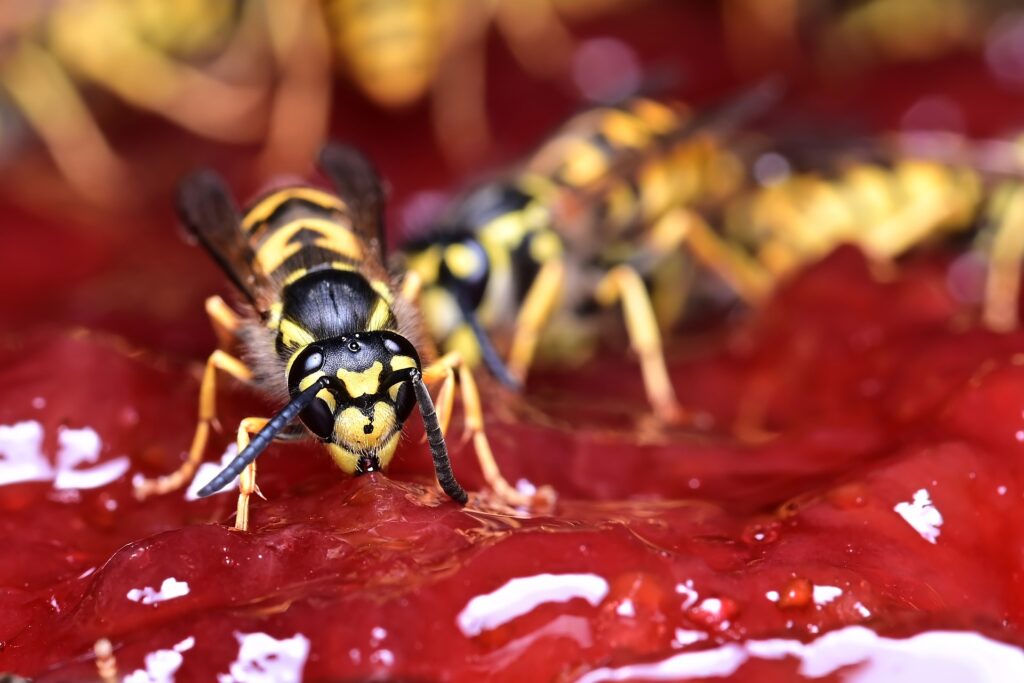
Yellow jackets chase people as a defensive measure to shield their nest and colony from potential threats. Disturbances near their home, sudden movements, and bright colors can trigger their aggression. They guard their nests intensely, using pheromones to communicate dangers and securing the environment for their offspring. Competition for food sources also fuels their defensive behavior. Understanding their territorial nature and avoiding the triggers like bright colors and sudden movements can help prevent attacks. If you want to learn more about why yellow jackets react this way and get tips to avoid their aggression, keep exploring the provided information.
Genuine Pest Control is your professional provider of exterminating services. Call us today at (402) 300-8168 for reliable and affordable pest management.
Key Takeaways
- Sudden movements trigger defensive responses.
- Bright colors and strong scents provoke aggression.
- Protection of their nest is a top priority.
- Aggressive behavior to secure food sources.
- Alarm pheromones prompt collective attacks.
Yellow Jacket Aggression Triggers
Yellow jacket aggression can be triggered by various factors, making these insects notorious for their defensive behavior. Aggression triggers include disturbances near their nests, sudden movements, and even bright colors or strong scents. When provoked, yellow jackets exhibit defensive responses aimed at protecting their colony. These aggressive behaviors are a natural instinct for these insects, as they perceive any potential threat to their nest as a danger requiring immediate action.
The defensive responses of yellow jackets can often be mistaken for unprovoked attacks. However, these insects are simply reacting to what they perceive as a threat to their home and offspring. Understanding these triggers can help individuals avoid confrontations with yellow jackets. By being aware of their natural instincts and taking precautions when in areas where yellow jackets are present, people can minimize the risk of encountering their defensive behavior. It is important to approach these insects with caution and respect to coexist peacefully with them in their environment.
Sense of Threat
Instinctively attuned to potential dangers, yellow jackets possess a finely tuned sense of threat detection that governs their reactions to external stimuli. This predator perception enables them to identify looming threats, triggering a defensive response when they perceive a risk to themselves or their nest. Yellow jackets have evolved to be highly sensitive to disturbances in their environment, interpreting sudden movements or loud vibrations as potential signs of danger. When they feel threatened, whether by a perceived predator or a human intruder, yellow jackets may exhibit aggressive behaviors such as chasing and stinging to protect themselves. Their inherent instinct to defend against perceived threats is a pivotal survival mechanism that has been honed over time. Understanding the yellow jacket's want sense of threat perception sheds light on why they react the way they do when they feel their safety or nest is compromised.
Protection of Nest
With a primary focus on safeguarding their colony, yellow jackets demonstrate unwavering dedication to the protection of their nest. Yellow jackets exhibit nest defense through various behaviors, driven by their innate territorial instincts. Here are some ways in which yellow jackets guarantee the safety of their nests:
- Guarding: Yellow jackets station guards at the entrance of the nest to monitor any potential threats and prevent intruders from entering.
- Aggression: When sensing a threat to their nest, yellow jackets exhibit aggressive behavior to deter predators or perceived intruders.
- Communication: Yellow jackets use pheromones to alert other members of the colony about potential dangers, coordinating a collective response to defend the nest.
- Persistence: Yellow jackets are relentless in defending their nest, pursuing threats over a considerable distance to guarantee the safety of their colony.
Through these strategies, yellow jackets effectively protect their nests from harm, showcasing their commitment to maintaining a secure environment for their offspring and fellow colony members.
Food Source Competition
When resources become scarce, yellow jackets engage in aggressive behavior to secure food sources necessary for their survival. They fiercely protect their foraging territories from other insects and animals to guarantee a steady supply of food. This competitive nature stems from their instinctual drive to survive and thrive in their environment.
Food Source Scarcity
Yellow jackets are known for their aggressive behavior, especially when it comes to defending their food sources. Food source scarcity can trigger this behavior, leading to increased yellow jacket aggression. Here are four reasons why food source scarcity can make yellow jackets more likely to chase humans:
- Environmental changes: When environmental conditions, such as drought or excessive rain, impact the availability of natural food sources like nectar and insects, yellow jackets may become more aggressive in their search for sustenance.
- Foraging patterns: Changes in foraging patterns due to factors like competition from other insects or a decline in available food can drive yellow jackets to be more persistent in seeking out alternative food sources, including human food.
- Population density: Higher numbers of yellow jackets due to favorable conditions can intensify competition for limited food, prompting them to be more assertive in securing resources.
- Hunger: A scarcity of food sources can lead to increased hunger among yellow jackets, making them more likely to pursue human food or even chase people in search of sustenance.
Foraging Territory Protection
Foraging territory protection is a vital aspect of yellow jacket behavior, particularly in the context of food source competition. Yellow jackets exhibit natural behavior when it comes to defending their foraging territories. These territories are crucial for their survival as they provide access to necessary nourishment. Yellow jackets are known for their territorial defense mechanisms, aggressively guarding areas where they find sustenance. This behavior is driven by the need to secure resources in a competitive environment where food scarcity can threaten their colonies.
When yellow jackets perceive a threat to their foraging territories, they may become more assertive in defending them. This territorial behavior is not meant to be hostile but is a survival instinct deeply ingrained in their nature. By safeguarding their foraging territories, yellow jackets guarantee a steady supply of food for their colony, contributing to the overall well-being and success of the hive. Understanding this aspect of yellow jacket behavior can help in minimizing conflicts and interactions with these insects, ultimately promoting harmony between humans and yellow jackets.
Survival Instincts Drive
In their quest for sustenance, yellow jackets exhibit innate survival instincts that drive them to fiercely compete for food sources within their habitat. This determination for survival is deeply rooted in their behavior, influencing their actions as they navigate the challenges of food source competition. Here are some key aspects of how survival instincts propel yellow jackets in their search for sustenance:
- Evading Predators: Yellow jackets remain vigilant for potential threats from predators such as birds, spiders, and other insects. They utilize evasive maneuvers to avoid falling prey themselves.
- Locating Prey: With a sharp sense of smell and sight, yellow jackets actively seek prey items like insects, spiders, and even human food sources. They utilize their agility and speed to pinpoint potential meals.
- Competing for Resources: Yellow jackets vigorously compete with other insects, including members of their own species, for access to food sources like nectar, fruits, and carrion.
- Defending Territories: Yellow jackets establish and safeguard foraging territories, marking them with pheromones to indicate ownership and discourage competitors. They will vigorously protect these valuable resources to secure their survival and that of their colony.
Pheromone Release Signals
Instances of heightened yellow jacket aggression can often be attributed to the release of pheromones by individual workers. Yellow jackets, like many other social insects, rely on chemical communication to coordinate their activities and defend their colonies. When a yellow jacket perceives a threat, it may release alarm pheromones to signal danger to other members of the colony. These chemical signals trigger a defensive response, leading to increased aggression towards the perceived threat.
Pheromones play an essential role in yellow jacket behavior, helping them to act collectively in defending their nests. The release of alarm pheromones can quickly escalate the aggression levels of the colony, prompting the yellow jackets to chase and attack intruders in an organized manner. Understanding the role of pheromones in yellow jacket behavior can provide valuable insights into how these insects communicate and coordinate their actions to protect their nests effectively. By being aware of these chemical signals, individuals can take precautions to avoid provoking aggressive responses from yellow jackets.
Quick Movements Provocation
When faced with sudden and rapid movements near their nests, yellow jackets can exhibit heightened aggression and may chase individuals perceived as threats. This fear response is triggered by the quick movements that disrupt their surroundings, leading them to defend their territory. Here are some ways body language impacts yellow jackets' reactions in such situations:
- Sudden gestures: Abrupt motions near a yellow jacket nest can signal danger, causing them to perceive the intruder as a threat.
- Erratic behavior: Unpredictable body language, such as waving arms or sudden twitches, can further agitate these insects, leading to increased aggression.
- Direct eye contact: While not a movement per se, direct eye contact can be seen as a challenge by yellow jackets, escalating the situation.
- Rapid retreat: Moving away calmly and steadily from the area, without making sudden motions, can help de-escalate the situation and prevent a chase response.
Being mindful of your body language and movements around yellow jacket nests is essential to avoid provoking them and getting chased.
Bright Colors Attraction
Curiously, have you ever wondered why bright colors seem to attract yellow jackets? It turns out that yellow jackets are drawn to vibrant hues due to color psychology and visual deterrents. In nature, bright colors often signal the presence of flowers or food sources, which is why yellow jackets might mistake someone wearing a bright shirt or hat for a potential meal. Additionally, yellow jackets have a want sense of color perception, making them more likely to be attracted to vivid shades.
Understanding this aspect of yellow jacket behavior can be pivotal in avoiding unwanted encounters. If you are spending time outdoors in an area known for yellow jackets, it is advisable to opt for neutral or earth-toned clothing as a visual deterrent. By wearing colors that blend into the surroundings, you can reduce the chances of attracting these insects. Being mindful of the colors you wear can help minimize the risk of yellow jacket interactions while enjoying the outdoors.
Tips to Avoid Yellow Jacket Attacks
To steer clear of yellow jacket attacks, understanding their behavior is key. Implementing effective prevention tactics can notably reduce the risk of encountering these aggressive insects. By being aware of their habits and taking proactive measures, you can minimize the chances of being chased or stung by yellow jackets.
Yellow Jacket Behavior
Yellow jacket behavior can be unpredictable and sometimes aggressive, especially during certain times of the year. Understanding their behavior can help you avoid potential attacks. Here are some key behaviors to be aware of:
- Nest Location: Yellow jackets typically build their nests in underground burrows, but they can also be found in wall voids, attics, and other secluded areas around your property.
- Defensive Behavior: Yellow jackets are highly protective of their nests and will aggressively defend them if they feel threatened. This can lead to stinging incidents, especially near their nest sites.
- Food Source: Yellow jackets are attracted to sugary foods and meats, so be cautious when eating outdoors, as they may perceive your meal as a threat to their food source.
- Agitation Triggers: Loud noises, sudden movements, and strong scents can agitate yellow jackets and provoke them to attack.
Effective Prevention Tactics
Given the proactive nature of yellow jacket behavior and their propensity for defensive measures, it becomes essential for individuals to implement effective prevention tactics to mitigate the risk of encountering these insects in a hostile manner. When engaging in outdoor picnics or garden maintenance, it is vital to take steps to avoid attracting yellow jackets and provoking them into aggressive behavior. Here are some practical tips to prevent yellow jacket attacks:
| Prevention Tactics | Description |
|---|---|
| Cover food and drinks | Keep all food and beverages tightly covered to avoid attracting yellow jackets. |
| Proper waste disposal | Dispose of garbage promptly in sealed containers away from picnic or garden areas. |
| Avoid wearing fragrances | Refrain from using scented lotions or perfumes that may attract yellow jackets. |
| Maintain garden cleanliness | Regularly clean up fallen fruits, spills, and debris in the garden to deter yellow jackets. |
Frequently Asked Questions
Can Yellow Jackets Sting Multiple Times?
Yellow jackets can indeed sting multiple times due to their survival instinct. Unlike bees that lose their stinger after one sting, yellow jackets can sting repeatedly, causing intense sting pain. This ability aids in warding off perceived threats.
Do Yellow Jackets Only Chase People?
Yellow jackets do not exclusively chase people; their behavior is not limited to humans. Animal behavior research suggests that yellow jackets exhibit aggression as part of their natural defense mechanisms, a response influenced by insect communication within their colony.
How Far Can Yellow Jackets Chase?
Yellow jackets can chase their perceived threat for a significant distance, especially if their nest is disturbed. Employing escape tactics such as running in a straight line or seeking shelter is essential in avoiding their swarm behavior.
Do Yellow Jackets Hibernate in Winter?
Yellow jackets do not hibernate in winter. Instead, they survive by seeking shelter in underground nests, often located near homes or within structures. These strategic nesting locations protect them from the cold, allowing them to survive until warmer temperatures return.
Can Yellow Jackets See in the Dark?
Yellow jackets possess impressive night vision capabilities, aiding their predatory behavior. Their compound eyes allow them to navigate in low light conditions, making them efficient hunters. This trait enhances their survival skills and foraging abilities.