
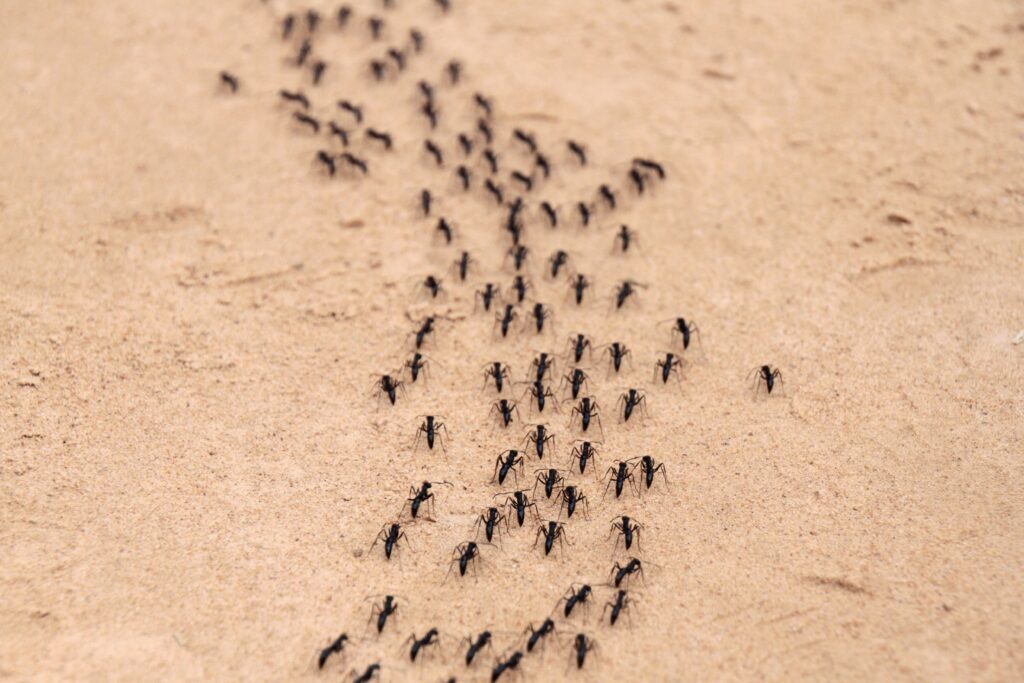
To eliminate ants instantly, options like pouring boiling water on ant nests, using vinegar solutions to disrupt their communication, employing boric acid cautiously due to toxicity concerns, applying diatomaceous earth to dehydrate them, utilizing essential oils like mint or lemon as natural repellents, using commercial ant sprays, or creating chalk barriers are effective methods. Each approach has unique benefits, from non-toxicity to quick action. Further exploration of these methods can provide insights into choosing the best strategy for your specific ant problem.
Genuine Pest Control is your professional provider of exterminating services. Call us today at (402) 300-8168 for reliable and affordable pest management.
Key Takeaways
- Boiling water effectively destroys ant nests, is cost-effective, and environmentally friendly.
- Vinegar disrupts ants' communication, and can be enhanced with lemon juice or salt.
- Boric acid is highly effective but requires safety precautions due to toxicity concerns.
- Diatomaceous earth desiccates ants and absorbs oils with minimal toxicity concerns.
Boiling Water
One effective method for instantly killing ants is by pouring boiling water directly onto their nests. This simple yet powerful technique is a cost-effective way to control pests without the use of harmful chemicals. Hot water works by destroying the ant colony's structure and killing the insects on contact, making it an efficient method for pest control.
Using hot water for pest control is a natural and environmentally friendly approach that can be especially useful for those who prefer non-toxic solutions. Boiling water is readily available in most households and requires no additional purchases, making it a convenient option for serving others by helping them deal with ant infestations.
Vinegar Solution
Let's explore the effectiveness of using vinegar against ants, how this solution works to eliminate them, and some practical tips for applying it.
Vinegar Vs. Ants
When dealing with ants, using a vinegar solution can be an effective and natural way to deter them from entering your home. Vinegar contains acetic acid, which disrupts the ants' sense of smell and interferes with their communication trails, making them avoid areas treated with vinegar. Additionally, the strong scent of vinegar masks the trail pheromones that ants use to navigate, further deterring them from entering your living spaces.
To enhance the effectiveness of the vinegar solution, you can also consider incorporating lemon juice or a salt solution. Lemon juice, like vinegar, has a strong scent that ants dislike, while the acidity in the lemon juice can help repel them. A salt solution, when combined with vinegar, can create a potent barrier against ants due to salt's drying properties, making it harder for ants to travel across the treated areas.
How It Works
The vinegar solution works by disrupting the ants' sense of smell and communication trails, effectively deterring them from entering treated areas. When ants come into contact with vinegar, the strong scent interferes with their ability to follow scent trails left by other ants, disrupting their communication and foraging patterns. This simple household ingredient triggers chemical reactions in ants, causing confusion and disorientation among them.
| Aspect | Details |
|---|---|
| Chemical Reactions | Vinegar disrupts ants' pheromone trails. |
| Effectiveness | Can deter ants from entering an area. |
| Ant Behavior | Interferes with their communication. |
| Toxicity | Generally non-toxic to humans and pets. |
Despite its effectiveness in deterring ants, vinegar is generally considered non-toxic to humans and pets, making it a safer alternative to chemical insecticides. Understanding how the vinegar solution works against ants can help individuals implement natural and safe pest control methods in their homes.
Application Tips
Implementing the vinegar solution for ant control requires a strategic and consistent application approach. When using plant-based alternatives like vinegar for pest control, it is essential to follow specific steps to maximize its effectiveness. To begin, mix equal parts of water and vinegar in a spray bottle. This solution can then be applied directly to areas where ants are present, such as entry points or ant trails. Remember to shake the bottle before each use to guarantee the mixture is well-combined.
For best results, apply the vinegar solution regularly, especially after cleaning the treated areas to maintain its potency. Additionally, consider sealing off entry points with caulk or other barriers to prevent ants from returning. By combining vinegar with other pest control methods like proper sanitation and food storage, you can create an environment that deters ants from infesting your space. Consistent and strategic application of the vinegar solution will help you effectively combat ant invasions while using natural, plant-based alternatives for pest control.
Boric Acid
Boric acid is an effective and commonly used remedy for eradicating ants quickly and efficiently. While boric acid is highly effective in exterminating ants, there are toxicity concerns associated with its use. It is important to keep boric acid away from children and pets as ingestion can be harmful. Safety precautions when using boric acid include wearing gloves to prevent skin irritation and guaranteeing proper ventilation to avoid inhaling the dust.
Despite its effectiveness, some individuals may prefer boric acid alternatives due to toxicity concerns. Alternatives such as natural repellents like peppermint oil or vinegar can be used to discourage ants without the potential risks associated with boric acid. Additionally, diatomaceous earth is another alternative that is effective in exterminating ants without posing significant toxicity concerns. When using boric acid or any alternative, it is essential to follow the instructions carefully to ensure safe and efficient eradication of ants from your home.
Diatomaceous Earth
Highly respected for its effectiveness in eradicating ants, diatomaceous earth is a popular substitute for boric acid due to its minimal toxicity concerns. This natural material is a potent weapon in pest control, especially against garden pests.
Diatomaceous earth is created from fossilized remains of minute aquatic organisms known as diatoms. It operates by desiccating insects upon contact, efficiently eliminating them. When ants encounter diatomaceous earth, it absorbs the oils and fats from their exoskeleton, resulting in their demise.
To utilize diatomaceous earth for pest control, simply sprinkle a fine layer in areas where ants are present, such as along baseboards, near entry points, or directly on ant hills in the garden. Reapply after rainfall or as necessary. It is essential to select food-grade diatomaceous earth for use in the garden to guarantee safety for plants and animals. With its non-harmful nature and potent effects, diatomaceous earth is a valuable resource in the battle against troublesome garden pests.
Essential Oils
Next in our exploration of natural ant control methods, we turn our attention to essential oils. These potent oils serve as effective ant repellents, providing a safe and chemical-free solution to pesky ant invasions. By creating your DIY ant spray using essential oils, you can effectively deter and eliminate ants from your living spaces.
Natural Ant Repellents
Utilizing essential oils as natural ant repellents can be an effective and eco-friendly way to deter ants from entering your living spaces. Mint leaves are particularly known for their effectiveness in repelling ants due to their strong scent that ants dislike. You can place fresh mint leaves near entry points or crush them to release more of their aroma. Additionally, lemon juice, another potent essential oil, can be used as a natural ant repellent. To apply lemon juice effectively, mix it with water in a spray bottle and spritz it along windowsills, doorways, and other areas where ants may enter. Reapply the lemon juice solution regularly, especially after cleaning, to maintain its efficacy. By incorporating essential oils like mint leaves and lemon juice into your ant control routine, you can effectively repel ants while avoiding harsh chemicals that may be harmful to the environment or your health.
DIY Ant Spray
Creating your own DIY ant spray using essential oils is a cost-effective and natural way to combat ant infestations in your home. Essential oils like peppermint, tea tree, and citrus oils are known for their ant-repelling properties. To make a simple ant spray, mix 10-15 drops of your chosen essential oil with water in a spray bottle. Shake well before each use and spray along ant trails, entry points, and other areas where ants are present.
For an added boost, consider using a sugar bait to attract ants to the sprayed areas. Mix sugar with a small amount of water to create a paste, and place it near the sprayed areas. The sugar will attract the ants, leading them to come into contact with the essential oil spray.
Additionally, you can create a cinnamon repellent by mixing ground cinnamon with water to make a solution. Spray this mixture in areas where ants frequent to deter them from entering your home. Remember to reapply these DIY ant sprays regularly for continued effectiveness against ant invasions.
Commercial Ant Sprays
Commercial ant sprays are commonly used to quickly eliminate ant infestations in homes and other spaces. These sprays often contain toxic chemicals that are effective at killing ants on contact. While these chemicals are efficient in getting rid of ants, they can also pose risks to humans, pets, and the environment.
The toxic chemicals in commercial ant sprays can be harmful if ingested or if there is prolonged exposure. It is important to follow the instructions on the product label carefully and use these sprays in well-ventilated areas to minimize the risks associated with these chemicals. Additionally, the environmental impact of these toxic chemicals should be considered, as they can contaminate soil and water sources if not used responsibly.
When using commercial ant sprays, it is essential to weigh the benefits of quick ant elimination against the potential risks of exposing yourself, your loved ones, and the environment to harmful chemicals. Consider exploring natural and less toxic alternatives if possible to address ant infestations effectively while minimizing negative impacts.
Chalk Lines
When seeking alternative methods to combat ant infestations, using chalk lines can be a simple and effective approach. Ants and chalk lines, do they work? Many believe that drawing chalk lines where ants are entering can act as a barrier, deterring the insects from crossing due to the calcium carbonate in the chalk disrupting their scent trails. However, scientific evidence to support this claim is lacking. Chalk line myths, debunked. While chalk lines may temporarily block ant entry points by masking pheromone trails, ants can find alternative paths or even build new ones. In reality, ants are highly adaptable creatures, and relying solely on chalk lines may not provide a long-term solution to an infestation. In this case, although chalk lines may offer a short-lived reprieve, addressing the root cause of the ant problem by eliminating food sources and sealing entry points is essential for effective ant control.
Frequently Asked Questions
Can Ants Survive Extreme Cold Temperatures?
Ants have adapted to survive extreme cold temperatures during winter by seeking shelter in underground nests or hibernating in groups. Their ability to withstand freezing conditions is linked to their physiological and behavioral strategies for winter survival.
Are There Natural Ways to Repel Ants?
"The saying 'prevention is better than cure' holds true when it comes to repelling ants naturally. Essential oils like peppermint and lavender can be effective, while vinegar, though a common deterrent, may not fully eliminate ant infestations."
Do Ants Have Natural Predators?
Ants have natural predators that help control their population. Spiders are known to prey on ants, while birds like sparrows and starlings also feed on them. These predators play a key role in maintaining ecological balance.
How Do Ants Communicate With Each Other?
In the intricate world of ants, communication is mainly through the use of ant pheromones, signaling messages to fellow colony members. This chemical language plays a pivotal role in maintaining the hierarchy and unity within an ant colony.
Can Ants Cause Damage to Buildings?
Ants, particularly carpenter ants, can cause structural damage to buildings by excavating wood for nesting, leading to decay. If left unchecked, this can compromise the integrity of a structure, necessitating costly repairs.


