
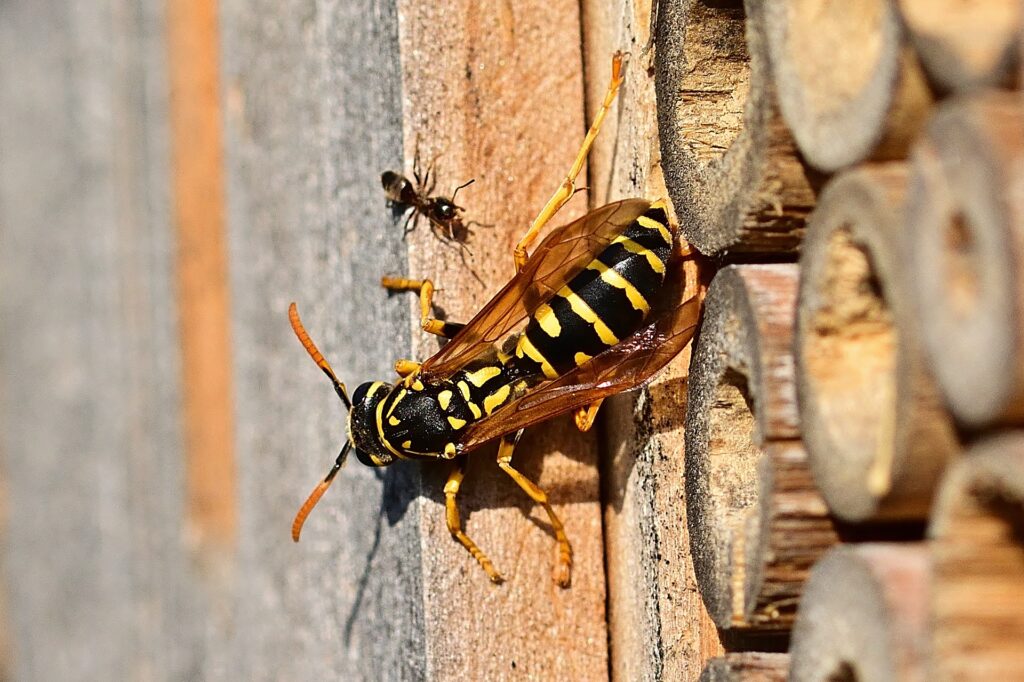
Yellow jacket wasps are known for their aggressiveness as they fiercely defend their nest and queen against perceived threats. Their protective nature stems from their social structure, where each member has specific roles for colony survival. When sensing danger, they release alarm pheromones and attack as a coordinated group. The triggers for aggression include vibrations near the nest, sudden movements, and loud noises. By understanding their defensive strategies and communication methods, individuals can better avoid potential confrontations with these territorial insects. Further details on yellow jacket behavior and ways to prevent attacks can provide valuable insights into their behavior.
Genuine Pest Control is your professional provider of exterminating services. Call us today at (402) 300-8168 for reliable and affordable pest management.
Key Takeaways
- Aggression triggered by nest protection instincts.
- Vibrations, sudden movements, and loud noises provoke attacks.
- Pheromones signal danger and coordinate defensive responses.
- Yellow jackets swarm to defend against potential threats.
- Efficient communication and specialized roles enhance aggressive defense.
Yellow Jacket Wasp Biology
Yellow Jacket wasps, scientifically known as Vespula spp., are social insects belonging to the Vespidae family. These wasps are known for their impressive nest construction abilities. Yellow Jackets build their nests using a paper-like material made from chewed-up wood fibers mixed with saliva. The nests are typically found underground, but they can also be located in wall cavities or other sheltered spots.
In terms of their reproductive cycle, Yellow Jackets have a complex system. The queen, the only reproductive female in the colony, lays eggs that hatch into larvae. These larvae are fed by the worker wasps until they pupate and emerge as adults. The role of the workers is vital in caring for the young, foraging for food, and defending the nest.
Understanding the biology of Yellow Jacket wasps, including their nest construction techniques and reproductive cycle, provides insight into their behavior and helps in developing strategies for managing and controlling these insects responsibly for the well-being of humans and the environment.
Social Structure and Roles
Yellow jacket wasps have a structured hierarchy within their colonies, with a queen at the top, followed by female workers, and male drones. Each member has specific roles and responsibilities based on their position in the hierarchy. This division of labor guarantees the efficient functioning of the colony and the successful completion of tasks such as foraging, caring for the young, and defending the nest.
Wasp Hierarchy and Roles
Have you ever wondered how yellow jacket wasps establish their hierarchy and fulfill various roles within their social structure? Yellow jacket wasps have a well-defined hierarchy and specific roles that contribute to the functioning of their colony.
Here are four key points to understand the hierarchy and roles within a yellow jacket wasp colony:
- Queen: The queen is at the top of the hierarchy and is responsible for laying eggs. She secretes pheromones that maintain order within the colony.
- Workers: Worker wasps are mainly females who perform various tasks such as building and repairing the nest, foraging for food, feeding the young, and protecting the colony.
- Drones: Male wasps are called drones. Their main role is to mate with the queen to sustain the colony.
- Soldiers: Some worker wasps take on the role of soldiers, defending the colony from threats and intruders.
Understanding the hierarchy and roles within a yellow jacket wasp colony sheds light on how these insects work together to secure their survival and success.
Division of Labor
Within the social structure of a yellow jacket wasp colony, the division of labor plays an important role in guaranteeing the efficient functioning and survival of the group. Worker roles are clearly defined within the colony, with each wasp having specific tasks to fulfill. Task specialization is key to the success of the colony, as different individuals focus on distinct responsibilities that contribute to the overall well-being of the community.
Worker roles in a yellow jacket wasp colony are divided based on age and capabilities. Younger wasps often take on duties within the nest, such as caring for the queen's offspring, constructing and repairing the nest, and foraging for food. As they age, their roles may shift to tasks like defense and reproduction. This division of labor guarantees that all essential functions within the colony are carried out efficiently.
Task specialization allows yellow jacket wasps to maximize productivity and effectiveness. By focusing on specific roles, each member of the colony can contribute to the collective success of the group. This structured approach to labor division is vital for the survival and prosperity of yellow jacket wasp colonies.
Defense Mechanisms and Communication
Yellow jacket wasps exhibit defensive stinging behavior when they feel threatened, using their venomous sting to protect themselves and their nest. Additionally, these insects release alarm pheromone signals to communicate danger to other colony members, coordinating a collective response to potential threats. To safeguard their nests, yellow jackets employ various protection strategies, including aggressively defending their territory and swiftly reacting to disturbances.
Defensive Stinging Behavior
Defensive stinging behavior is an essential aspect of yellow jacket wasps' survival strategy. When they feel threatened or perceive a danger to their colony, these insects display a stinging response that is swift and aggressive. Here are four key elements that contribute to their defensive behavior:
- Stinging Mechanism: Yellow jacket wasps possess a stinger connected to venom glands, allowing them to inject venom into their target when they sting.
- Protecting the Nest: These wasps sting to defend their nests from predators or perceived threats, showing a strong commitment to safeguarding their offspring and queen.
- Warning Signs: Before stinging, yellow jackets often exhibit warning signs such as buzzing loudly, hovering closely, or making sudden movements to deter potential threats.
- Group Defense: Yellow jackets can release pheromones that signal other colony members to join in the defense, increasing the intensity of their response when under attack.
Understanding these defensive behaviors sheds light on the yellow jacket wasps' remarkable ability to protect themselves and their colonies effectively.
Alarm Pheromone Signals
Amidst potential threats, yellow jacket wasps utilize alarm pheromone signals as a vital component of their defense mechanisms and communication strategies. These chemical signals play an important role in alerting other colony members to danger and coordinating collective responses to perceived threats. Through intricate pheromone interactions, yellow jackets can effectively communicate the presence of a predator or disturbance, triggering a unified reaction from the colony to protect the nest and secure survival.
Chemical communication, facilitated by alarm pheromones, allows yellow jackets to convey information rapidly and efficiently within the colony. When a yellow jacket detects a threat, it releases alarm pheromones into the air, signaling danger and prompting nearby individuals to prepare for defense. This coordinated response is necessary for the survival of the colony, enabling yellow jackets to ward off predators and safeguard their nest effectively.
Nest Protection Strategies
In safeguarding their nests, yellow jacket wasps employ a range of defense mechanisms and communication strategies aimed at ensuring the protection and longevity of their colonies.
- Nest maintenance: Yellow jackets meticulously maintain their nests, repairing any damages promptly to keep intruders out and protect their larvae and queen.
- Aggression triggers: These wasps are highly protective of their nests and exhibit aggressive behavior when they sense a threat nearby, responding swiftly to defend their territory.
- Alarm pheromones: Yellow jackets release alarm pheromones when their nest is disturbed, signaling danger to other colony members and prompting a coordinated defense response.
- Communication through vibrations: Yellow jackets communicate through vibrations on the nest surface, alerting others to potential dangers and coordinating group actions to fend off threats effectively.
Nest Protection and Aggression Triggers
During the nesting season, yellow jacket wasps exhibit a remarkable level of aggression when it comes to protecting their nests. To understand their behavior better, let's explore the triggers that provoke such defensive strategies and the communication signals they use to coordinate their actions.
| Aggression Triggers | Defensive Strategies | Nest Protection | Communication Signals |
|---|---|---|---|
| Intrusion near nest | Sting potential threats | Guard entrances | Release pheromones |
| Vibrations on nest | Swarm potential invaders | Repair nest damage | Wing movements |
| Sudden movements | Alert colony members | Patrol surroundings | Antenna touches |
| Loud noises | Attack in groups | Build barriers | Chemical cues |
Yellow jacket wasps rely on a combination of visual cues, pheromones, and physical actions to protect their nests effectively. Understanding these triggers and strategies can help us coexist peacefully with these fascinating creatures during the nesting season.
Foraging Habits and Food Sources
Yellow jacket wasps exhibit distinct foraging habits and rely on specific food sources to sustain their colonies. When it comes to their foraging behavior and food preferences, yellow jackets have intriguing strategies:
- Food Preferences: Yellow jackets are carnivorous and feed on other insects, spiders, and even carrion to obtain the protein they need for colony development.
- Hunting Strategies: These wasps are skilled hunters and use their agility and speed to catch prey. They often paralyze their victims before bringing them back to the nest.
- Foraging Behavior: Yellow jackets are known for aggressively defending food sources, which can lead to territorial disputes with other insects, especially bees.
- Territorial Disputes: Yellow jackets establish and defend foraging territories, marking them with pheromones to signal other wasps and deter intruders from accessing valuable food sources.
Understanding the foraging habits and food sources of yellow jacket wasps can help individuals avoid encounters with these aggressive insects.
Tips for Avoiding Yellow Jacket Attacks
To minimize the risk of yellow jacket attacks, it is essential to be aware of certain behaviors and take preventive measures. Yellow jackets can become aggressive when they feel threatened or when their nest is disturbed. To avoid provoking them, it is important to remain calm and move away slowly if you encounter a yellow jacket. Preventive measures such as keeping food and drinks covered outdoors, especially sweet items that attract them, can help reduce the chances of an encounter. When outdoors, wearing light-colored clothing and avoiding strong perfumes can also deter yellow jackets. Safety precautions like sealing garbage cans securely and repairing any holes or gaps in buildings can prevent them from building nests close to human activity areas. Understanding their defensive behavior and aggression triggers can aid in avoiding potential attacks. By taking these simple yet effective steps, individuals can minimize the risk of yellow jacket encounters and stay safe outdoors.
Frequently Asked Questions
Can Yellow Jackets See Colors, and Does It Affect Their Behavior?
Yellow jackets possess color perception, utilizing visual cues to navigate their environment. Research suggests color recognition influences their behavior, potentially impacting their aggression levels. Understanding these aspects can aid in developing strategies for interaction and management.
How Far Can a Yellow Jacket Travel From Its Nest?
Yellow jackets can travel up to 1,000 feet from their nests in search of food. Their nesting habits include constructing paper nests mostly underground. They communicate through pheromones and exhibit territorial behavior to protect their foraging range.
Do Yellow Jackets Have a Specific Predator or Natural Enemy?
Yellow jackets have developed intricate survival strategies to evade predators and safeguard their nests. Through predator avoidance behaviors and collective nest protection, these wasps guarantee the safety and continuity of their colonies in the face of natural threats.
How Do Yellow Jackets Choose Their Nesting Sites?
Yellow jackets choose their nesting sites based on environmental factors and competition avoidance. Nest selection is influenced by factors such as proximity to food sources, shelter, and the availability of suitable materials for constructing their nests.
Can Yellow Jackets Survive the Winter and How?
Yellow jackets survive winter through hibernation strategies. They store food, seek shelter in protected areas, and slow down their metabolism. Their ability to withstand cold temperatures and conserve energy enables these insects to endure the harsh winter months.


